Industry analysis · Banking and credit unions
Claim reserve anomalies: how to find reserves that drift, jump or sit still when they shouldn't
A reserve is the adjuster's best estimate of what a claim will cost. Most move in a familiar rhythm. The ones that keep climbing late, jump just before closing, or never move at all are worth a look.
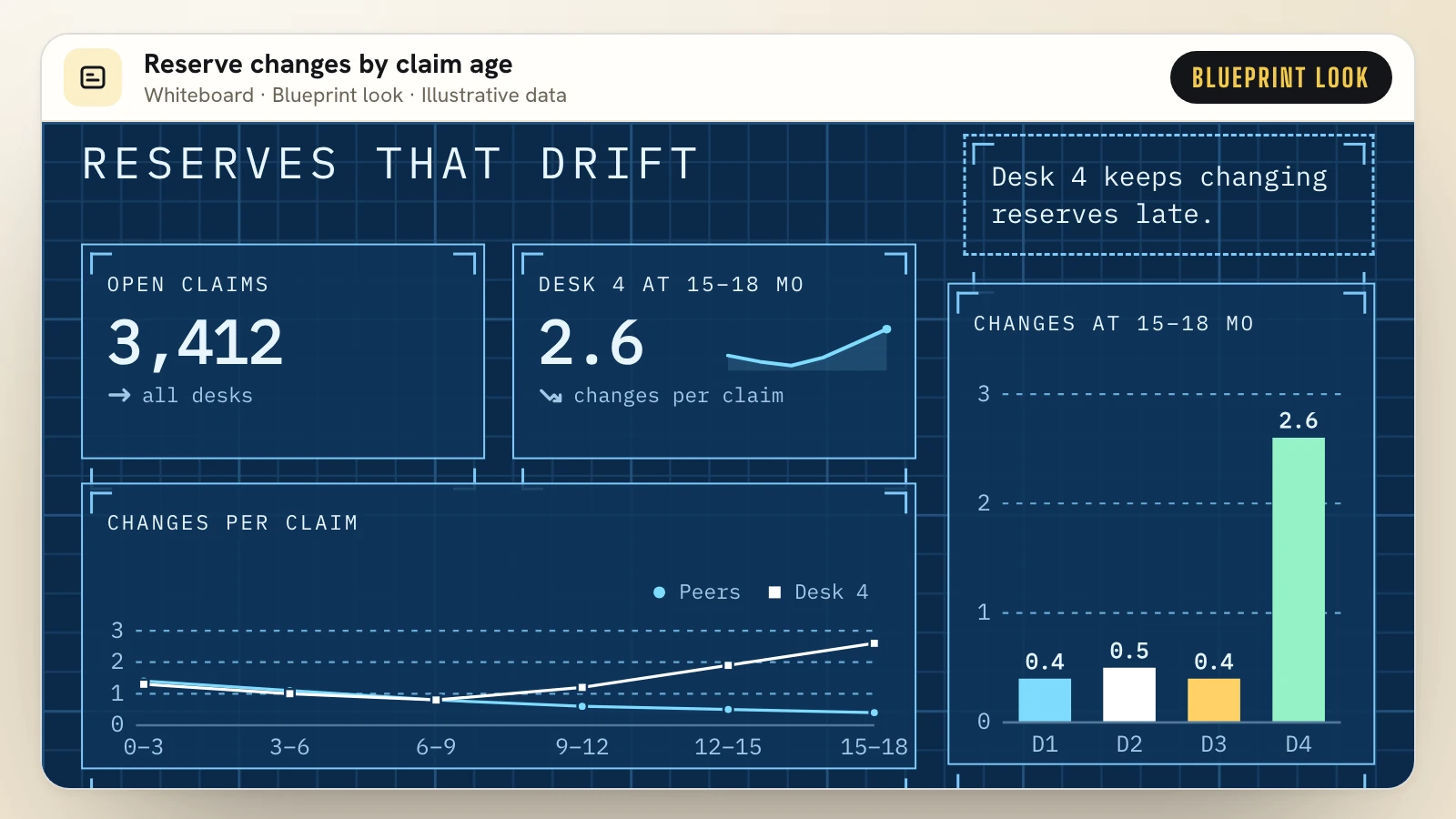
Harbourline General writes commercial liability and workers’ compensation. Its reserving actuary, Priya, signs off the reserve figures every quarter. The totals reconcile. What worries her is the shape underneath: a few desks whose open claims keep getting revised long after the rest of the book has settled down.
Totals cannot show that. A reserve history can.
What a normal reserve looks like
Most claims follow a familiar path. The first reserve is set at notice. It is revised a few times in the early months as reports, estimates and medical bills arrive. Then it settles, and the claim closes near the final reserve. Every carrier’s rhythm differs, but within one book it is surprisingly stable.
Anomalies are departures from that rhythm:
- Late creep. Small increases, again and again, well after similar claims have settled.
- Pre-payment jumps. A large increase days before a payment of almost exactly the new amount.
- Frozen reserves. A reserve that never moves while payments climb towards it.
- Round-trip changes. A reserve cut and restored, sometimes more than once.
Finding the desk that keeps revising
You ask
How many reserve changes do open claims get at each age, by desk, compared with the rest of the book?
What Storek did
- Rebuilt each claim’s reserve history from the reserve change log, in date order.
- Grouped claims by type and by age in three-month bands.
- Compared each desk’s average changes per claim with peers at the same age and type.
- Masked claimant names and addresses.
The answer
One desk keeps raising reserves on older claims while peers have stopped. The next step is to read those claims.
Dig deeper: how Storek found this
Sources linked. The reserve change log, the claims export, the payments ledger and the adjuster notes. Changes joined to claims by claim number; payments joined the same way; desks came from the handling adjuster on each claim.
Duplicates and variants. The change log recorded some edits twice when a reserve was saved from two screens. Storek collapsed identical changes logged within the same minute so they were counted once, and listed the collapsed rows for checking.
Peer comparison. Each desk was compared with others handling the same claim type at the same age, so a desk carrying older, harder claims was not marked out for the wrong reason.
Masking. Claimant names, addresses and bank details were masked on arrival.
Drill down. From the rising line to the desk’s claims aged 12 months or more, then to each claim’s reserve history beside its payments and notes, so the reviewer can see what triggered each increase.
For analysts
Changes were counted per open claim per band, so a desk with more claims did not look busier simply for volume. Pre-payment jumps were found by pairing each increase with any payment within a short window and comparing the two amounts.
Jumps right before payment
A second view is often sharper. Pair each reserve increase with the next payment on the same claim. When the reserve rises and a payment of nearly the same size follows within days, the reserve may have been raised to fit the payment rather than the other way round. That is common and often harmless, a late invoice for instance, but a cluster on one desk or one payee is worth a look. Combine it with duplicate invoice checks when the payee is a vendor.
Rebuild histories
Put every reserve change in date order per claim. Note who made it and why, if a reason is recorded.
Set the normal rhythm
For each claim type, see how often reserves change at each age across the book.
Find departures
Look for late creep, pre-payment jumps, frozen reserves and round trips, compared with peers.
Read the files
Pull the claims behind each departure and read the notes beside the changes.
Write the definition down
Agree what “late” and “close to the payment” mean once, so every quarter uses the same rule.
How Storek helps
Storek links reserve logs, claims, payments and adjuster notes, masks personal data on arrival, and flags desks or claims whose reserves move unlike their peers so a person can review them. Keep the meaning of “late increase” in Definitions, compare it with unusual adjuster patterns, and see more on the financial services page.