One number everyone agrees on
When the rule is written down once, every report counts the same people the same way.
- No more arguing over whose figure is right
- Old hand-built formulas stop drifting
The rulebook · Governed definitions
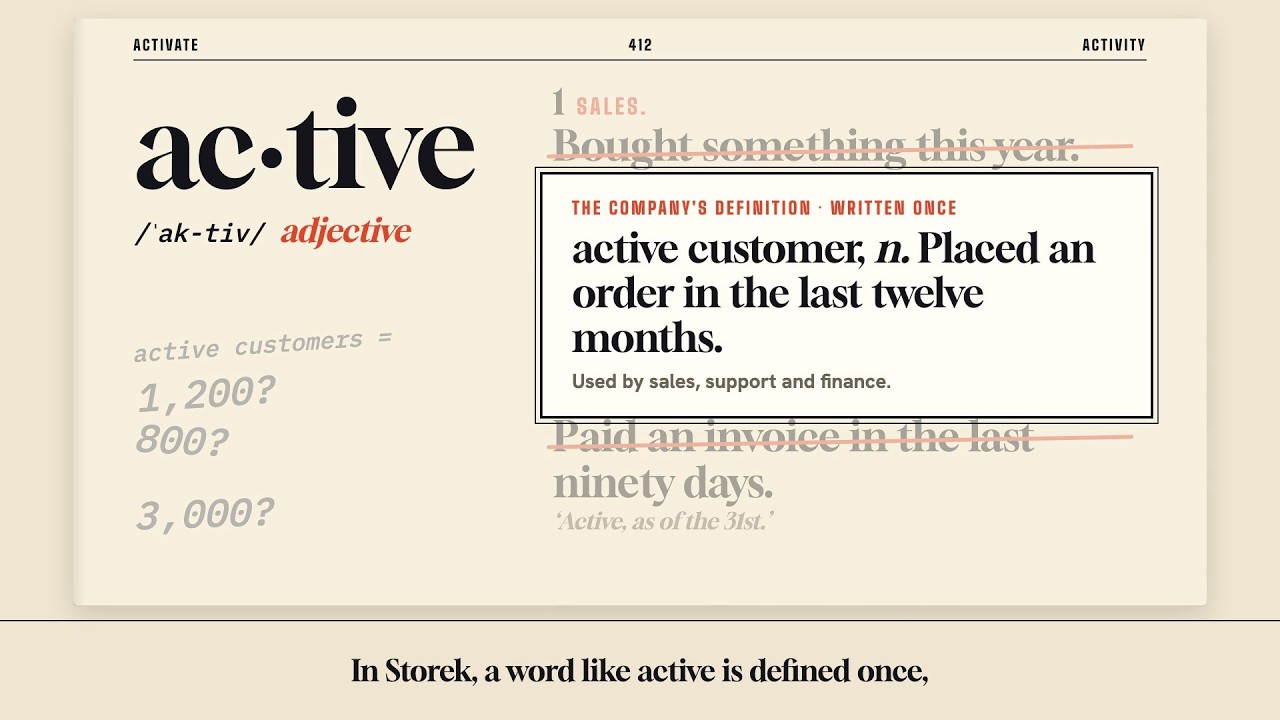
Decide once what "churn" or "active customer" means. Every answer, chart and report then follows that same rule. When a rule changes, you can see who changed it, why, and what it was before.
Every account with an open deal
Every account that paid an invoice
A customer with a signed contract that paid us in the last 12 months.
“The board deck and the sales forecast should never show two different customer counts.”

When the rule is written down once, every report counts the same people the same way.
Each change carries a short note, so months later you can still see why a number moved.
A definition that contradicts an existing metric is refused, so two teams can't end up with two churn rates.
Name a group like "active customers" once, and every chart and answer uses that same rule.
Storek watches for definitions drifting apart or dates stuck in the past, and flags them for a person to fix.
FAQ
Metrics such as churn rate, named groups such as active customers, and the business terms your team uses. Each one is stored once and used everywhere.
Storek refuses to save a definition that contradicts an existing metric, and shows you where the conflict is.
Yes. Every version is kept with its reason. Compare any two and undo in one step.
It learns your terms from the data and suggests what to remember. Your team approves what is kept.
Book a demo
30 minutes. Your data or our sample. No slide deck. Pick a time straight after the form.